Writing instruction is one of the most challenging aspects of teaching. No matter which subjects or grade levels we teach, we all assign writing tasks for a wide variety of purposes. We spend a good deal of class time helping our students develop the skills needed to tackle these tasks. For example, we might need to teach skills like proper paragraphing when writing an essay, using evidence to clarify a point, or how to use transition words and phrases, to name a few.
As teachers, though, we can get so caught up in teaching and assessing these very specific writing skills that we forget why we teach writing in the first place. If what we want is to develop writers who can write for a variety of audiences and purposes, then our instruction should mirror this. When students only write for the teacher, they may see writing as just another assignment rather than what it is: a craft that develops continually over time and that has the power to affect others.
Students collaborate before writing
I’ve had the pleasure of teaching at all levels of the typical school: elementary, middle, and high school. Whether I happened to be teaching multiple subjects in an elementary classroom, middle school math, or high school science, I’ve always found my students to be the most motivated writers when I and other teachers weren’t their primary audience for their writing. When students know their words on a page will be seen by others, they more readily see themselves as authors, rather than students who are practicing to write.
Most importantly, students become less focused on meeting the criteria in a rubric and more focused on their effectiveness as writers. They start to get a sense of writing as a craft and the myriad ways we can use words to share information and impact an audience.
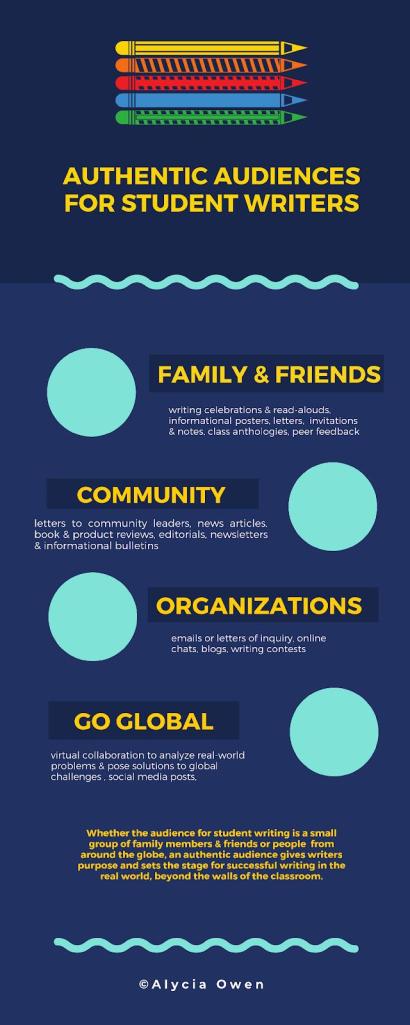
Not sure where to start? Here’s a small sampling of ways to include a wider variety of authentic writing experiences for students. If any of these ideas spark your interest and you’d like to learn more about how to implement them, just ask. I’m happy to chat about how these writing experiences might be incorporated into your lesson planning.
Infographic – Authentic Audiences for Student Writers
When our country’s National Report Card was published last October, I was taken aback by the dramatic drop in our students’ math and reading scores since the beginning of the pandemic. The results were based on the National Assessment of Educational Progress (NAEP) which has been used to evaluate education trends in our country since the 1990s. While the NAEP doesn’t tell us everything, it is a vital set of data for educators, particularly as we grapple with the impact the pandemic has had on our students.
While I think most educators expected a dip in scores, the magnitude of the loss was a lot to take in. I believe many of us had a similar response to the report as did our Secretary of Education, Dr. Miguel Cardona, particularly on these points:
The scores are “appalling and unacceptable.” If the test results and calls to double-down on our recovery efforts don’t “have you fired up to raise the bar in education, this is the wrong profession for you.”
“The data prior to the pandemic did not reflect an education system that was on the right track. The pandemic simply made that worse. It took poor performance and dropped it down even further.”
There are some bright spots in the data. “65% of urban districts included in the NAEP showed no statistically significant decline in 4th grade reading scores, and 84% showed no such decline in 8th grade reading.”
We must simultaneously meet students where they are while raising the bar for all students, not just in the immediate future, but in the long term.
“Now is the time for bold action.”
We are fortunate that the Biden-Harris Administration jump-started improvement efforts via the American Rescue Plan (ARP), which gave states and school districts $130 billion to help students thrive. The ARP requires states, local districts, and public charter schools to have “meaningful stakeholder engagement” and to publicly post their planned use of ARP dollars.
While these efforts are to be applauded, and though the words above outline what politicians and others outside of the classroom must know, the ARP does not inform schools and teachers what WE must do to bring about urgent change, other than providing general guidelines.
Funding is just the beginning of what actually needs to happen in the day-to-day workings of schools. Funding won’t get us very far if we’re not in the trenches at schools and in classrooms doing the hard work to move us forward. Worse yet, if not utilized with intention and forethought, funding could be wasted on programs or services that are ineffective.
I’ve spent a good deal of time lamenting the results of the recent National Report Card, just as I’ve spent a good deal of time lamenting the many other losses our students carry with them, like missed graduation ceremonies, tournaments, and other important milestones. But, I’ve also spent a good deal of time wondering,
Now what? What are we (literally) to do in the classroom and in schools?
I think the first step is really one of mindset, a prerequisite for the plan I’ll outline shortly. We must take care when thinking about our students in terms of what they’ve lost during the pandemic. We risk creating a deficit mindset toward our students when, in reality, they possess countless skills, attitudes, and strengths that they bring to the classroom, some of which they gained during the pandemic (Honigsfeld 1-2). An assets based approach, where we start with the strengths of the students, rather than focusing on what may have been lost, is the best place to start.
The classroom is where the magic happens, so every plan for me comes down to its impact at the classroom level. Below I outline a 5-step plan that schools and districts can use while considering the basic systems and practices that apply to the classroom. This plan requires very little in terms of additional funding, making it possible to sustain improvement efforts over the longer term.
The path forward is within reach for all schools. Though there’s little about running a school or classroom that’s simple, I hope you’ll agree that the following guidelines are nothing new, they cost very little, and they don’t require us to do anything other than become more aware and intentional in our efforts to meet the needs of our students.
Develop a Literacy Ecosystem
A literacy ecosystem is “an interconnected group of individuals and activities that prioritize literacy development for all students, across disciplines, and beyond the school walls.” (Owen, 2022)
When a literacy ecosystem is in place, literacy becomes a communal priority, increasing the likelihood that literacy initiatives will succeed. As well, literacy ecosystems lend themselves to collaborative practices when literacy development among students is a joint responsibility.
To find out the degree to which a literacy ecosystem is present in your school or district, use this reflection tool as a starting point.
Rethink staff meetings
Staff meetings take time. Time we do not have. Time I could be spending on my classes.
Teachers don’t typically begrudge time spent in meetings when they know it will benefit them or their students. In fact, teachers are some of the most generous people on the planet when it comes to putting in extra time on behalf of the children and young adults in their charge.
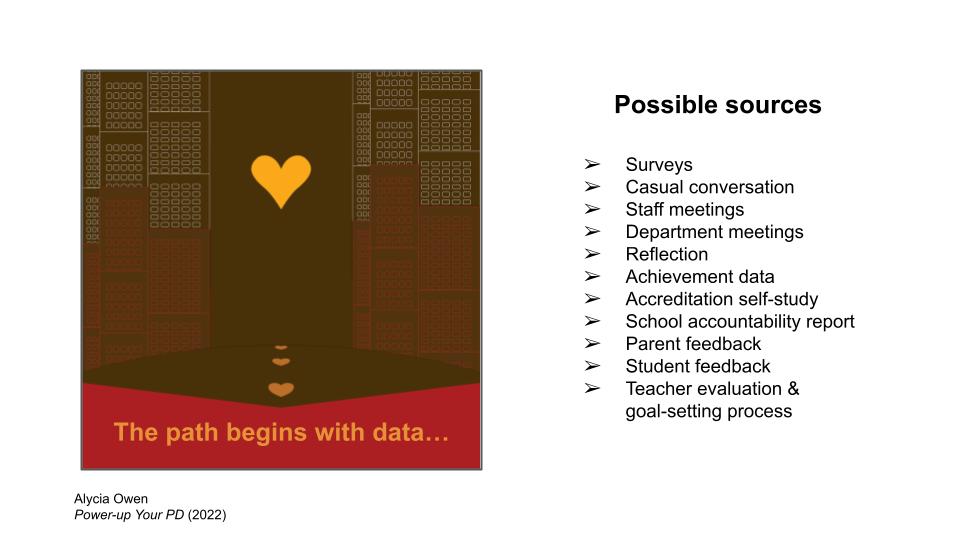
That being the case, I would encourage site administrators to 1) take a data-based approach to finding out what your teachers need, then, 2) act in good faith on what the data tells you. For example, if a quick online staff survey shows that many teachers have questions about translanguaging in the classroom, set aside time at an upcoming staff meeting to host a guided discussion on the topic. Or, ask a faculty member or two who are using translanguaging strategies effectively to share their knowledge.
In this way, meetings gain relevance and build capacity around topics of greatest need to those who work most directly with students. This is not to say that longer-term or administrative initiatives shouldn’t be addressed in staff meetings, rather that the content and structure of staff meetings should reflect the expressed needs of the staff members who are most directly impacted by the topics covered at those meetings.
Plan to SWiRL
If you’ve been working with multilingual learners (MLLs) in the past few years, you may be familiar with the acronym, SWiRL. It serves as a reminder to plan lessons that incorporate all language domains in a way that encourages student interaction. So, a SWiRLed lesson includes opportunities for students to speak, write, interact, read, and listen.
Applying SWiRL when planning to teach MLLs is critical for their success. After all, how does one learn a language without using it with other people? This being the case, let’s consider for a moment that ALL students, even native English speakers, use a different language at school than they use at home or with their friends. This ‘foreign’ language is academic English.
Unlike conversational English, academic English is characterized by highly specialized vocabulary that is used in very precise ways and in very specific contexts. For example, students in a high school science class might be asked to discuss the various reactions that take place in the Calvin cycle in photosynthesis. My guess is, most of these students won’t have very many reasons in their future lives to use phrases like light-independent reaction or atmospheric carbon dioxide. This is true whether or not the students are native English speakers or are learning a second or third language. All students are academic language learners, or ALLs.
Let’s broaden how we apply SWiRL to our lesson plans by considering that every student is working to gain fluency in academic English, not just those whose first language is something other than English. As we move forward, SWiRLed lessons should be the norm in all classrooms to ensure that academic language development is intentionally supported and developed across all language domains in lessons that encourage interaction between students. The days of lessons in which students ‘sit & get’ are relics of a past that has not served our students well and, if MLLs make big gains as a result of SWiRLing our lessons, we can use this knowledge to support all students in their pursuit of academic achievement.
Build in movement and hydration
It’s very concerning when districts reduce or eliminate activities like recess and PE as a way to ‘get back’ instructional time. While this tactic may seem like a fair trade on the surface, it’s not an effective course and could, in fact, be harming our kids.
For just a moment here, I’m going to become that teacher. The one who wants to return to the way it was when she was in school. Humor me, please.
When I was in lower elementary school, I would have been content to spend every recess with my nose in a book. I would have been happier still to stay in the classroom, especially on those days when Santa Ana winds whipped through my SoCal town. But our teachers made us go out to play. They made us participate in PE. And, when it was time to come back into the classroom, they made us stop at the water fountain to get a drink before the next lesson. They knew what was good for us.
We weren’t coerced or mistreated, of course, but our school leaders and teachers made sure that physical exercise and hydration were prioritized so that we could get the most out of our lessons when we were seated in the classroom. Our bodies’ physical needs were addressed so that we could do things that required lots of brain power.
Physical movement and hydration are necessary for our brains to work effectively, and they help us to stay focused when we’re doing something that requires cognitive effort. Movement has the added benefit of lowering stress. We would be wise to incorporate both into our daily school routines, if we want our students to succeed academically.
Connect with families
We typically invite our students’ families to join us for Back-to-School Nights, Parent-Teacher Conferences, or important meetings, but there’s so much more we can do to develop a strong partnership between schools and the families of the students we serve.
If you’re wondering whether it’s worth the effort, consider that family engagement in schools can lead to several positive outcomes including improved student achievement, fewer disciplinary issues, improved parent-teacher and teacher-student relationships, as well as a better school climate.
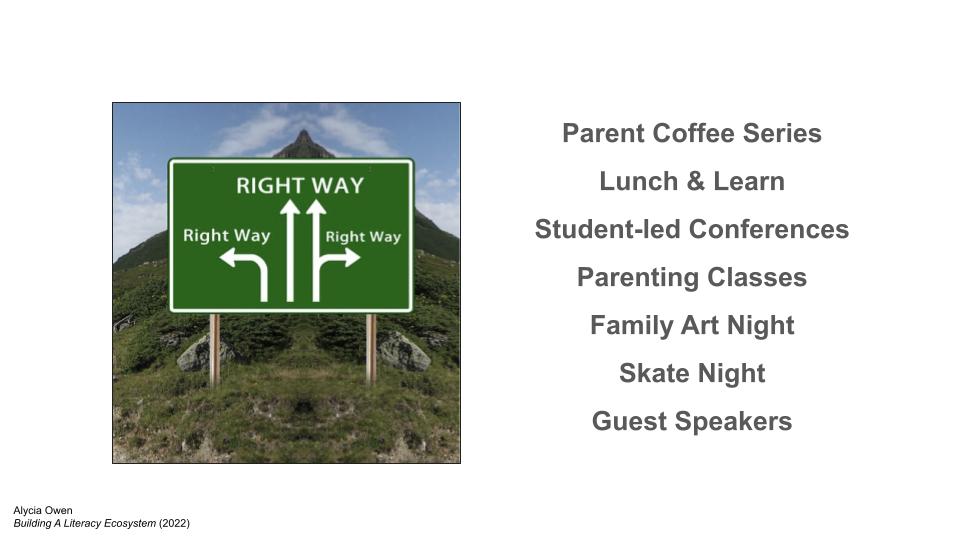
So, consider branching out when it comes to engaging families. Move beyond the typical parent meetings and consider making family connections a priority throughout the school year by incorporating a range of activities. There is not one right way to do it, but family activities across a school year, in addition to parent-teacher conferences, might include activities such as these:
Moving forward can be challenging, especially when the stakes are so high. But with a plan to structure our path ahead, we can do great things. I hope the 5 points illustrated here serve as a starting point for discussion and action in schools.
Wishing you all a very happy new year and renewed energy for the coming semester!
Alycia
References
Honigsfeld, Andrea, et al. “Establish Your Why.” From Equity Insights to Action: Critical Strategies for Teaching Multilingual Learners, Corwin, Thousand Oaks, CA, 2022.
According to UNESCO, “It is a day to celebrate how teachers are transforming education but also to reflect on the support they need to fully deploy their talent and vocation, and to rethink the way ahead for the profession globally.”
While it’s always a good idea to show appreciation for teachers, UNESCO’s call to action challenges us to go beyond sentiments, with an eye toward lifting up teachers around the world and honoring their pivotal role in the communities they serve.
Let’s take a closer look at what this day is all about.
A day to celebrate how teachers are transforming education
In the spring of 2020, teachers around the globe stepped up to meet the challenges of the COVID-19 pandemic. Teaching practices were transformed seemingly overnight, as in-person lessons gave way to remote or hybrid learning models. It was the teachers themselves who drove this rapid transformation, as we implemented new practices and evaluated the impact of these practices on students.
Now that I’m out of the classroom, I continue to see this same transformative energy among teachers, but through a different lens. For example, I marvel at teachers who, despite being exhausted from their daily work, routinely arrive at a workshop filled with enthusiasm and energy. They’re ready for some new learning and eager to get started. Or, colleagues on Twitter and Facebook who transform teaching practice by sharing their work so generously and creating spaces for educators to grow.
A day to reflect on the support teachers need to fully deploy their talent
Teacher salaries would seem an obvious place to start, but there’s so much more to supporting teachers than offering pay raises. If you’re in the mood for some reflection, here are some ideas to get you thinking.
Administrators or other school leaders might begin by asking themselves, Do I demonstrate respect for teachers by starting and ending meetings on time? Do I seek teacher input when planning PD opportunities? In what ways do I demonstrate appreciation for teachers and staff?
Teachers or instructional assistants may ask themselves, Are there any opportunities for collaboration with other teachers? Are there ways to make supportive connections with students’ families? Do I seek out administrator support when needed?
When reflecting on the need for support, it’s important to note that the next step requires action. Once needs are identified, it’s helpful to set a short-term goal for achieving a desired result.
For example, a PE teacher may observe that some of his English learners (ELs) are not comprehending lessons or using new vocabulary. He makes it his goal, at some point during the first quarter of school, to meet with an EAL teacher to discuss ways to embed English language into PE lessons.
Identifying the support systems we need and intentionally moving toward using them is the catalyst for becoming the transformative educators we’re here to celebrate.
A day to rethink the way ahead for the profession globally
The International Day of the Teacher is also a day for us to look to the future of our profession. With all that we’ve learned through the pandemic, how do we use what we now know to best serve schools, teachers, and students? What practices have served us and which have not?
These questions and others are beautifully framed by Andrea Honigsfeld and colleagues in their book, Equity Insights To Action: Critical Strategies For Teaching Multilingual Learners (2022), which begins with a powerful pause to “…recognize the power of this moment, the interconnectedness of our past, present, and future.” They borrow a portal metaphor from Indian novelist Arundhati Roy (2020), who asserts that pandemics create gateways that move us to the present by forcing us to leave the past behind. Using this concept, the authors ask us to:
“…consider the gateway between the educational world we knew before the pandemic and the next one we are ready to create. We can enter the portal dragging generations of inequities, injustices, prejudices and biases, and deficit-based and damage-centered thinking and actions with us. Or we can walk through the portal ready to imagine and fight for a world of equity in our classrooms, schools, and communities.” (p.1)
Teachers, I hope you’re having an excellent day. Never forget the importance of your work.
References
Honigsfeld, Andrea, et al. “Chapter 1.” From Equity Insights to Action: Critical Strategies for Teaching Multilingual Learners, Corwin, Thousand Oaks, CA, 2022.
By now you’ve likely heard of the elevator pitch, a short speech designed by professionals to share their credentials and skills with people who may not be familiar with their areas of expertise. They are often used during job interviews or at networking events as an efficient way to highlight our professional backgrounds. A speech of this sort allows us to offer a quick synopsis of our background, experience, and goals in the amount of time it would take to share an elevator ride with someone. In fact, good elevator pitches are no longer than 60 seconds. This makes it easier for listeners to pay attention and it forces the speaker to get right to the point.
There are other advantages, too. Delivering elevator pitches gives us opportunities to practice speaking with more clarity and precision, and it also boosts our self-confidence.
When I first learned about the utility of developing an elevator pitch for myself, my mind immediately went to myl English learners. They needed opportunities to practice articulating their ideas, and they sure could benefit from increased confidence in their abilities. So, I took the idea of the elevator pitch, which is very common in the corporate world, and used it as the format for my high school students to introduce themselves to a partner during the first week of school. If you’re interested in trying this out, consider whether students might benefit from a paragraph frame such as this one:
Hello, I’m_______and I’m in ___ grade. I’ve attended school here since_____and my favorite subject is__________. I enjoy____________. One thing I’m proud of is______. This school year, I hope to________.
My students loved this activity for a few reasons: 1) the required length was short, 2) they only had to speak to a partner, not the whole class, and 3) they got to talk about things that were important to them personally. The elevator pitch was a non-threatening, low-stakes activity with a very low affective filter.
Well, the elevator pitch introductions were just the beginning for me. When particular activities like this one are working in my classroom, I try to dissect what the students and I have done with an eye toward adapting the activity for use in other areas. I am particularly interested in strategies and activities that promote interaction, and this one definitely fills that bill. This is how I ended up with Pitch the Plan, a short speech designed for students to share their prewriting ideas with their peers.
For most of my career, I’ve found it helpful to have students of any age develop a plan for their writing and to talk to me or a partner before they actually sit down to write. These simple practices promote writing fluency and help students think about the structure of their writing more intentionally. So, I merged these activities with the concept of an elevator pitch and developed Pitch the Plan as a regular part of my writing program.
Here’s how it works in my classroom.
1 – Whiteboards or chart paper to co-brainstorm
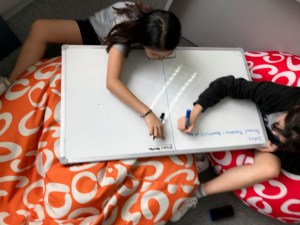
Students work with 1 or 2 partners to brainstorm, plan and record their notes on a portable whiteboard. I keep various sizes and types of whiteboards on hand: small ones for individuals, some a bit larger for small-group and partner work, as well as a couple of tables with an erasable surface. If your students don’t have access to these you can use chart paper. They are making plans for their individual writing tasks, but I find that plans are more detailed and complete when students have bounce their ideas off of a partner or two first. This gives students an opportunity to collaborate using content-based vocabulary and includes the important element of embedding writing and speaking into lessons.
Students work with a partner to brainstorm the best ways to organize their ideas for an essay.
2 – Developing a plan
As students brainstorm, they are encouraged to develop a plan for their writing as they talk. The plan is intended to provide a preliminary road map for the student writers in the interest of bringing structure and focus to their writing. While a variety of structural models and graphic organizers are offered (for example, a T-chart, a bullet-point outline, etc.), students are encouraged to organize their writing in a way that suits the particular task, audience, and/or purpose.
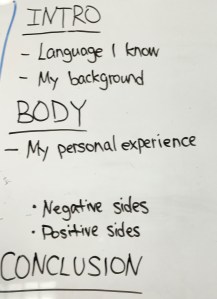
Students sketch and/or make notes on their whiteboards or chart paper to prepare to share their ideas aloud with other students. It’s helpful, at this point, to have them do a short practice session with a partner.
A student organizes his ideas for a personal narrative about the experience of being multilingual.
3 – The Gallery Walk
For this part, I set the room up as a Gallery Walk, with the student whiteboards/chart papers propped up for display at various “stations” around the room. We travel as a class to each station.
As we stop at each board, the writer who drafted the plan steps forward to pitch it to the rest of us with the help of the visual aid they created. I act as the timekeeper. While a typical elevator pitch is 60 seconds or less, I find a 2-minute time limit works best for this activity; students still have to be concise but aren’t compelled to speak too quickly.
Students pitch their writing plans to classmates.
After we’ve rotated through all the stations, I close with a few guided questions such as these:
Now that you’ve seen other plans and done some more thinking, is there anything you might change about your plan?
Is there a plan that you thought was particularly well done? What is it about that plan that you liked?
I also emphasize that planning ahead helps us organize our ideas effectively, but that good writers don’t necessarily stick to their original plans. Authors may decide to add, delete, or move ideas around as they see fit and as their writing develops.
Give students a few minutes to revisit their plans. I find it most helpful for students to do this independently, and to note any modifications they’d like to make to their original plan now that they’ve had some time to discuss, view peer models, and reflect.
Let’s recap the many benefits of using Pitch the Plan in the classroom:
Whiteboards/chart paper are informal/not assessed for students but provide great formative data for teachers
Establishes the act of writing as a fluid, creative process whether writing narratives or expository pieces
Creates multiple interaction points/opportunities for oral language development
Promotes generation of multiple ideas
Encourages use of all language domains
Develops the habit of intentionally organizing writing for the greatest impact on readers
Provides students with multiple models for organizing their own writing
Allows students to practice oral presentation skills in front of a familiar audience
Builds self-confidence
While Pitch the Plan is great for larger writing assignments or projects, the basic concept is easily modified for other uses. For example, if students are writing a short paragraph, I might have them take a moment to plan their main points on a sticky note, then meet in groups of 3 to pitch their paragraph plans to each other before allowing a few minutes for verbal peer feedback.
I hope you find a way to incorporate Pitch the Plan as part of your students’ writing or project work. If you have questions along the way or just want to share how you plan to use it in your classroom, please feel free to connect here or on Twitter @alycia_owen.
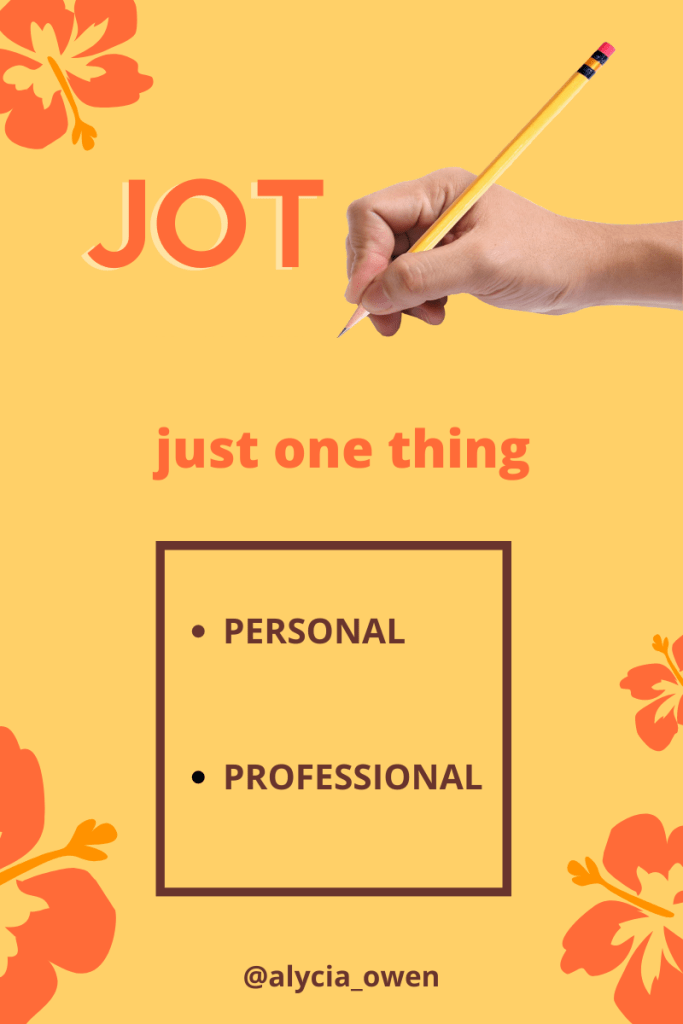
JOT. It’s what we do when we want to write a quick note to ourselves so that we don’t forget something important.
As an acronym, it stands for Just One Thing.
Rick Hanson, psychologist, author, and Senior Fellow at the Greater Good Science Center at UC Berkeley, has even turned JOT into a newsletter. Each month, subscribers receive a simple practice, or ‘Just One Thing’ designed to expand one’s wisdom, joy, and happiness. These JOTs are not elaborate plans for well-being and they aren’t necessarily goals unless you want them to be. The newsletter is simply a series of quick suggestions to put readers on the path to a happier, healthier existence.
As we start a new school year, let’s JOT for ourselves. Think about one small shift or practice that would foster happiness, well-being, or a positive outlook. Do this once for your personal life and once for your professional life. It doesn’t take big shifts in practice to make amazing gains, so small and simple is good. For example, I might choose to drink more water for my personal health. In my professional life, I might commit to eating lunch outside of my classroom rather than working straight through the day. Now, you try it! If you need some ideas to get you started, you can refer to last month’s post.
JOT – Just One Thing: A tool to focus our attention on small shifts in practice that can have a big impact on our health & happiness.
That was easy, wasn’t it? You now have two strategies that, despite being simple, have the power to create a big impact on your health and happiness. If you want to turn your JOTs into goals, that’s easy, too. Just think about adding in a few more specifics so that your JOTS become SMART goals. SMART goals help us stay on track while moving toward our goals and are:
S – Specific. You’ve already done this part with your JOT.
M – Measurable. How will you know if your goal’s been accomplished?
A – Achievable. Is it realistic?
R – Relevant. Does it serve me in the context of my current circumstances?
T – Time-bound. When do I want to achieve my goal?
Using my professional JOT about eating lunch away from my desk, here’s how it might look when expressed as a SMART goal:
I will go to the staff room or outdoor tables to eat lunch at least 3 days a week for the first month of the school year.
As with any goals, we can then stop at the end of our self-imposed timeline and re-evaluate. Was I able to achieve the goal? Did it improve my life in any way? Do I want to continue this practice? Do I need to revise my goal? Set a new one?
Whether you just quickly identify your JOTs or turn them into SMART goals is up to you. What matters most is that you start the school year strong by prioritizing ongoing self-care. Make it a habit to prioritize your physical and mental health so that you can feel your best and give your best to your students, friends, and family.
Teaching is arguably one of the most demanding professions on the planet and I’m rooting for you as this new school year takes shape. Good luck and best wishes! May you and your students thrive in the months ahead and make lots of wonderful memories along the way.
It’s the end of June, and even if you’re enjoying a break from the classroom, your brain might be a-buzz with all those projects, lessons, and materials you’re thinking about for the upcoming school year. In fact, maybe you’ve already taken a trip or two to a dollar store to stock up on supplies and decor, or filled your Amazon wish-list with books.
Stop!…at least long enough to read this article.
Teachers around the globe are facing the prospect of professional burnout in numbers greater than ever. In a recent poll conducted by the National Education Association (NEA), 90 percent of respondents reported teacher burnout as a serious problem.
Of course it’s beneficial to create a physically inviting classroom space and to map out lessons and projects in advance, but these priorities only scratch the surface in terms of setting yourself up for success. They are not enough to sustain us through the 180 days of decision fatigue that result from meeting the needs of the young humans in our charge.
It’s time to stop and make a plan for wellness to sustain you throughout the school year, and to help you navigate your way to next June with your personal well-being intact.
Sustained Self Care
While mental health days or trips to the spa may rejuvenate us in the short term, the daily demands placed on teachers call for a more sustained approach to self care. We know the advice given to air travelers, to put on our oxygen mask first before taking care of others, and it’s time we take that message to heart.
To take a sustained approach requires habit. In this case, we need to start the school year with habits that support our health and wellness. Below are some habits to consider establishing this fall. Think ahead today about which ones might serve you when the new school year begins.
Physical Health
Snacks – Create a space to hold healthy, easy-to-grab snacks. Keep a variety of snacks available at all times. Avoid storing candy, chips, or other unhealthy snacks in this space (On those occasions when I told myself that bag of fun-sized Reese’s were for the kids, I’m sure half of them ended up on my waistline!)
Hydration – Bring at least one full bottle of water to school each day. Take this bottle with you when you have recess or lunch duty. Balance coffee intake with plenty of caffeine-free options like herb teas. Keep a carton of water bottles in a cupboard or closet in case you forget your water bottle or don’t have time to refill yours.
Movement – Build in extra steps by parking far away from your classroom. Take steps or stairs when available. Take 60 seconds to stretch before going home for the day. Consider walking while collaborating with co-teachers or others, especially when brainstorming (One of the best habits I ever formed! It promotes physical health AND relieves stress!).
Sleep – Turn off notifications on the phone while sleeping. Avoid caffeine after noon and stick to herb teas/water/club soda. Unwind with a book or magazine rather than checking social media/emails before bed.
Breathing Break – Set your timer at various points in the day, like recess and lunch breaks, with a “breath-break” reminder. Whatever you’re doing when the timer goes off, pause to take some deep breaths. As you exhale, envision tension leaving your body and let your shoulders and face relax. This takes less than 30 seconds, but it has the power to reset our mood and improve our ability to focus.
Skip the Wine – It’s the stuff of memes that teachers can’t survive without wine or other alcoholic drinks. If you routinely decompress at the end of a day with a drink or two, consider whether this habit is really having the desired effect. Alcohol, even in moderate amounts, can have a serious negative impact on your quality of sleep. A moderate amount of alcohol for men is two drinks and for women is one drink. This level of consumption has been shown to reduce sleep quality by 24%.
Mental Health
Fun – When we don’t plan for fun, it’s easy for our workloads to consume us. Just as you’d schedule an IEP meeting or a lesson plan, schedule time for fun. Be specific in your plans. If we say to ourselves, “I’ll go out for coffee when I’m done marking these papers,” we all know that might not happen. Instead, make concrete plans for fun and relaxation by writing them down. Jot them wherever you record other important reminders and treat them as non-negotiable activities. When we don’t take care of ourselves, we are ill-equipped to give our energies to others (Remember that oxygen mask advice?).
Household Budget – Maintaining a healthy household budget seems to get more challenging by the day. There are so many priorities to juggle, and we owe it to ourselves and our families to use our income wisely. This is a tough one for many teachers, but do you really have the spare money to spend on classroom decor and supplies? Are there other ways to make your classroom inviting that don’t include spending your own cash? Whose responsibility is it, after all, to provide pencils and paper for the students? (Hint: It’s not yours!). Don’t put added stress on yourself and your family by spending money on unnecessary items. If you have the money and the desire to spend, go for it! Just be sure your spending is not a burden on you or others you are responsible for. Your students will survive, and thrive, even if your classroom isn’t picture perfect. Focus instead on keeping it tidy and showcasing student work and co-created anchor charts.
Celebrate Success – Make a habit of acknowledging at least one success at the end of each day. Be specific, such as, “Lenny used transition words in a paragraph” or “My guiding questions in Social Studies class led to deeper discussion.” This can be done in your mind or, better yet, consider writing your thoughts on a small piece of paper and putting these in a container or Celebration Jar. This is another one of those wellness strategies that takes less than one minute to do, so it’s easy to fit it into the day if you make it a habit. At the end of the semester, or anytime you need a lift, read the slips of paper and celebrate your classroom successes.
Classroom
Routines – The benefit of classroom routines is well-established and there are countless resources available online like this one to serve as a guide for the types of routines that would be helpful. They go a long way toward reducing stress for students and teachers alike. Take a look at your daily work flow to identify places in the day where routines can help your class run more smoothly, such as establishing standard procedures for taking restroom breaks, sharpening pencils, or even asking questions.
Less Marking – Marking papers is probably one of the last things you’d like to be doing at the end of the school day. While it’s not realistic to avoid this entirely, it is possible to drastically reduce the amount of paper grading that must be done. The first step is to develop a habit of doing frequent formative assessments. Observing students in action during group work and class discussions reveals lots of actionable data that we can jot down for future reference. Exit tickets, short written responses, and small quizzes (think 1-2 items) are great ways to check for understanding. We need not and should not rely so heavily on large tests, essays, and projects to tell us what we need to know about our students’ learning. Also, consider using verbal, recorded feedback to your students using tools like Flipgrid, Google Classroom, or Microsoft Teams Class Notebook.
Stagger Turn-in Dates – If you teach at the secondary level and you have multiple sections of the same class, think about staggering the due dates of major assessments so that you’re not stuck with grading for 100+ students all at once. When I first tried this strategy, I did get some minor protest from students (“Why does Period 3 get to turn theirs in later?”). The following year, I simply told students why I do this and to expect this as routine. I’ve had zero push-back since.
Guest Speakers & Field Trips – Summer is the perfect time to think about potential guest speakers to invite to your classroom. Rather than wait until the school year is underway, invite guest speakers now and propose a tentative date for them to visit your school. Let them know that you’ll contact them again once you get closer to the actual date. It’s a lot easier to squeeze in a short follow-up call or email during the school day than it is to make initial contact with someone. Initial contacts usually include more discussion and take more time than you can reasonably offer within the scope of a school day, so have these longer conversations now while you have a little more flexible time. The same is true for contacting individuals to organize field trips. If at all possible, make initial contacts in the summer to get the planning started.
Big Events – Every school has big events that are part of the published school calendar. Rather than just tack this calendar near your desk, use it to guide your planning. Pencil big school events into your plan book at the start of the year or post them in your online calendar. This will help you avoid conflicts and will reduce stress later. For example, if you know that there’s an awards assembly scheduled the week before winter break, don’t plan for student presentations that you know will consume the whole class period.
Report Cards – Just as you plan for other big events, plan for writing report card comments. I’ve found a couple of go-to strategies that really help. 1) Keep a working document on your computer or a physical notebook to record brief, informative report card comments, rather than waiting to do them all during report card week. 2) Don’t have any major projects or assessments due during the time you’re writing report cards. Instead, plan for review activities or project work sessions that are easy to plan and monitor so that you can free up time to write quality comments.
Emergency Sub Plans – The first time I was required to write emergency sub plans, I’ll admit I wasn’t too happy about it. Who wants to do a task that’s not essential in the week before classes start? Ugh! BUT, they sure were very handy when I was in a car accident one Sunday afternoon. I was out of school for some time, and the emergency plans I had put in place kept my students going until I could organize plans for a more lengthy absence. Here’s a sample plan for one class period that I used for a Sheltered English class. Feel free to edit and adapt it to your own needs. Notice that the plans aren’t very elaborate. That’s perfectly ok for this purpose. You would need to provide an appropriate nonfiction article for your students to read and download these awesome templates from Teachers Pay Teachers/Spark Creativity.
How are YOU planning for wellness?
Jotkoff, Eric. “NEA Survey: Massive Staff Shortages in Schools Leading to Educator Burnout; Alarming Number of Educators Indicating They Plan to Leave Profession.” NEA, 1 Feb. 2022.
In the summer of 1994, I was about to jump into my first overseas teaching job in Karachi, Pakistan, where my husband and I would teach for the next five years after having been in California our whole lives. We were uprooting from our home and taking two small children with us. Our kids were entering Kindergarten and Grade 1. It was an emotionally charged time of excitement and anticipation, with some apprehension sprinkled in. Would our kids like their new school? Would we cope well with living so far away from family and friends? Email and text messaging were not available at the time, and the distance from home was more than a little intimidating.
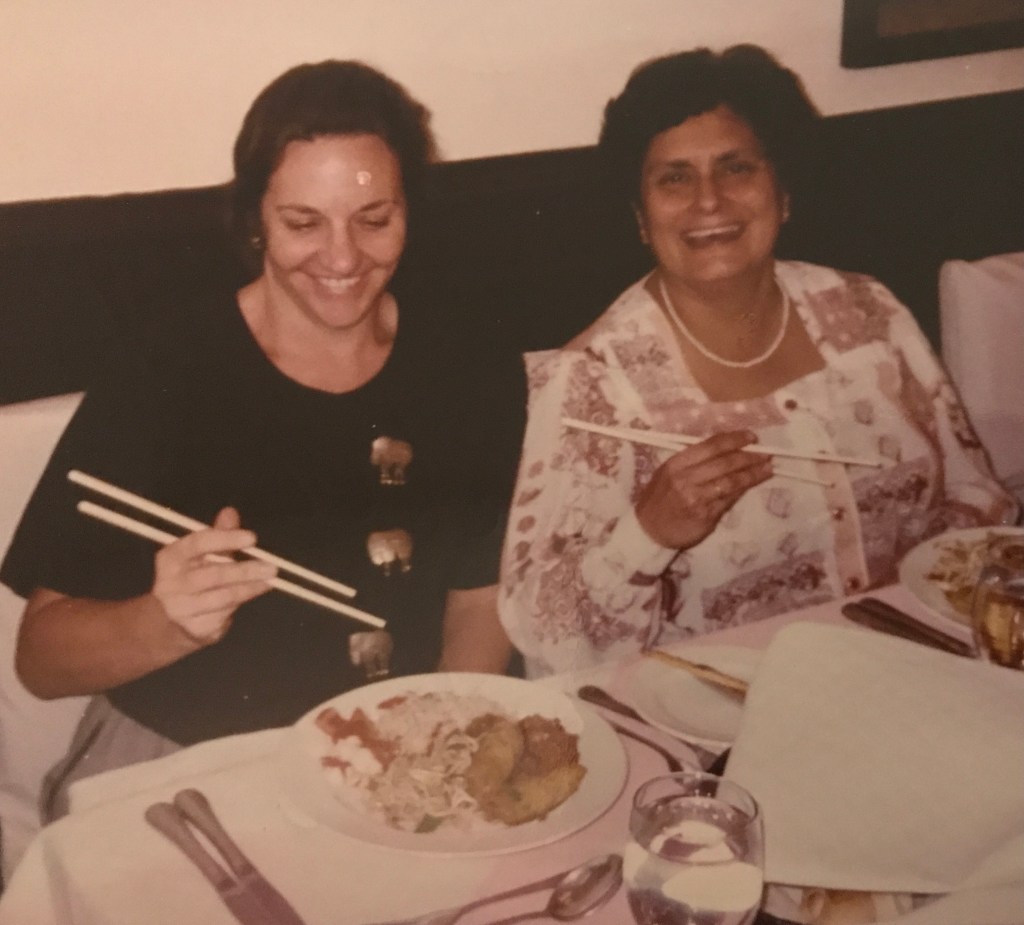
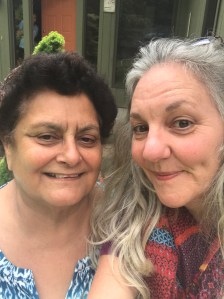
Me and PJ out for dinner in Karachi, Pakistan
Ralph Jahr, former Superintendent of Karachi American School (KAS) was great at answering all of our questions and preparing us for this big step. Shortly before our departure, he sent a fax introducing me to Ms. Phiruze Ogra, noting that she is known by all as simply ‘PJ.’ I learned that she was an amazing cook, a skilled baker, a formidable tennis opponent, an exceptional teacher, and a staunch advocate for students. How thrilled I was to learn a little about the lady who would be my Instructional Assistant! I should note that Instructional Assistants at KAS routinely work with small groups of students, co-plan with the teacher, and lead the way in creating and delivering lessons for Pakistani Studies.
Within 24 hours of landing at Jinnah International Airport, I was greeted on campus by PJ, and she immediately took me for a tour and introduced me to colleagues. We chatted, strolled, and spent the next several days preparing our classroom and learning about each other. I knew in those first few days that I had been matched with an exceptional human being, and that I had not only gained a teaching partner but a friend. We meshed as a team from Day 1, and our families made countless memories together through the years, sharing all of life’s joys and challenges and traveling to see each other when our schedules allowed.
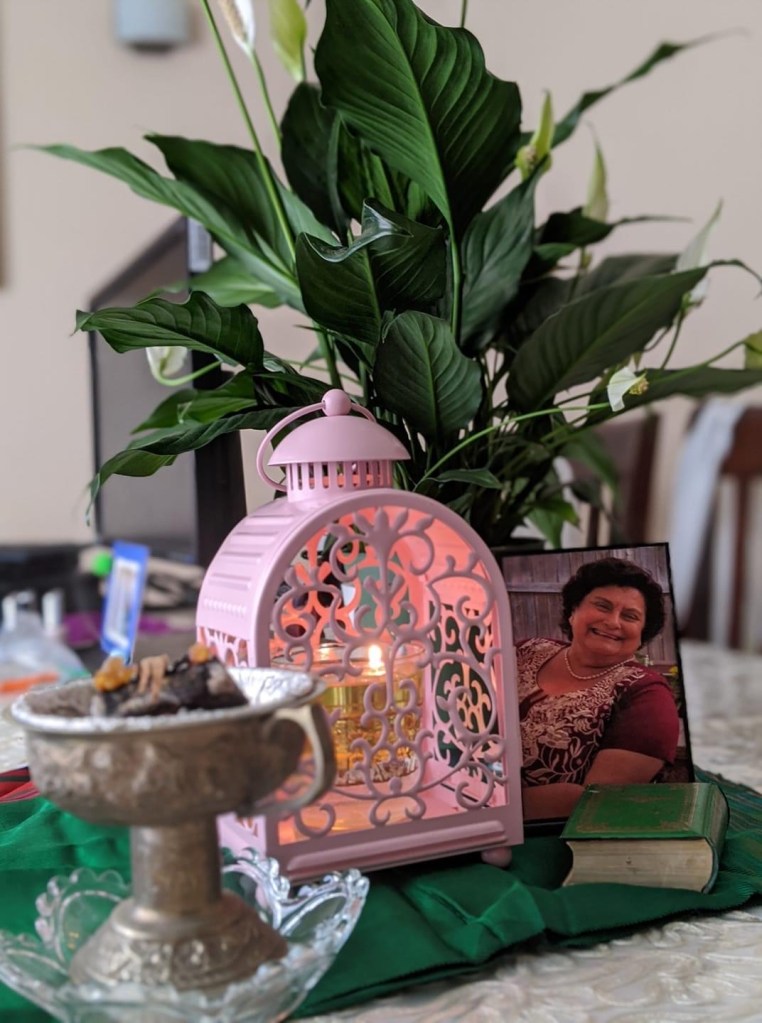
Fast forward to the spring of 2020. I was teaching remotely from the US since my school overseas had closed in response to the pandemic. Mornings began with my usual routine of checking messages, responding to emails, and getting ready for another day of online teaching. May 22nd was different. My heart dropped as soon as I picked up my cell phone and saw the devastating headline that flight PK 8303 from Lahore to Karachi had crashed during its landing. PJ had been visiting friends in Lahore, and I knew she was excited to be flying back to Karachi, the city she called home. We would soon confirm the news we all dreaded, and learned that she, along with 94 others, had perished in the crash.
Readers might wonder why I would choose to tell this tragic story. I tell it because it is not the whole story of PJ. This post is, in fact, a celebration of her teaching life, and of her as a role model to teachers and students alike. She personified what it meant to be a co-teacher before co-teaching was “a thing” in education. While team teaching had its heyday in the 1970s, co-teaching, which emphasizes co-planning and co-reflecting, did not start to gain momentum until the mid 1990s. She was definitely ahead of her time! In honor of PJ, and in celebration of the lives she touched, I offer the Top 10 co-teaching lessons she embodied all those years ago, and that are just as relevant today. They have stood the test of time and they are instructive for anyone entering into a co-teaching or collaborative partnership with a peer.
1.Get Comfortable With Being Uncomfortable
Teaching in front of a peer can be intimidating, especially when that peer brings skills and experience that we don’t possess. How could I possibly be comfortable teaching with another teacher in the room to watch my every move? I was more nervous that first day than I had ever been during my student teaching, but I pulled myself together and did my best to appear confident and to make a good start with my students.
At break time, PJ brought out the snacks, as she often did, and we started to chat. The first thing she said was, “That game you did with them was great! Can you give me a copy for my files? I want to use that some time. I wonder if we could use it as part of their journal writing this week.” Of course, this started a whole conversation on how we could extend one successful activity and turn it into another learning opportunity.
While it might take us out of our comfort zones to teach in front of a peer, we can get comfortable knowing that genuine, respectful peer support validates what we’re doing well, and can spur us on to make improvements to our lessons.
2. Trust Your Partner
It can be tough to trust someone you don’t know very well. Though some co-teachers volunteer to work together, it is also true that co-teaching partnerships are sometimes formed by administrators, and the teachers may or may not have worked together before. In the case of me working with PJ, we had never been in each other’s presence prior to our co-teaching partnership, and had not even spoken on the phone.
We both had to trust that the other had good intentions and the expertise to do the job. Mistrusting one another up front would do nothing to foster a relationship, and it would undermine any attempt to build a relationship in the future.
PJ, despite the fact that she had years of experience at KAS and had worked with many skilled teachers before me, trusted my experience and welcomed my ideas. I trusted her as someone who had clearly served the KAS community well, and I let her know how much I appreciated learning from her.
When placed in a co-teaching partnership, we might not have the luxury of time to build trust, so we have to start with it. As Ernest Hemingway reminds us, “The best way to find out if you can trust somebody is to trust them.”
3. Co-Teaching is Daily Professional Development
There’s no better professional development, in my opinion, than regularly watching a master teacher in action. It’s even better when you can dissect lessons together and talk about what’s working and what’s not. Such was the opportunity I had working with PJ. Every day was an opportunity to learn and grow for both of us.
Among the thousands of ideas we took from one another, I learned that students raised in the UK system, which influenced education in Pakistan, bring strategies they’ve been taught in math that I had never seen in my US-based teaching career. She learned that having students talk before they write, a common step in US-based writing instruction, facilitates productive language development. These are simple but powerful examples of the knowledge we gained simply by watching one another.
Observations like these were strengthened by the fact that we also had collaboration time each day to debrief lessons and support each other in our learning. Scheduled collaboration time is vital to the success of a co-teaching model, and we made a point of using that time to its best advantage every day.
4. Students First
No matter how strong a teaching partnership may be, there will always come a time when there’s a disagreement over how something should be taught, to what degree we should emphasize a particular skill or concept, which materials to choose, the best ways to assess learning, and more.
When we get to these moments, it’s wise to step back and ask, “What’s best for students?” The first time it happened between me and PJ, she was watching me pack basal readers into a carton. An administrator had expressed that he would send someone around to pick the books up for donation because “basal readers are outdated and we are moving in the direction of the whole language approach.”
PJ protested my unquestioning compliance with the administrative request, saying, “What about what’s best for our students? Our English learners love these books. The vocabulary words are highlighted and there’s a glossary at the end of each story.” She was right. It was smarter to keep at least some of the books around for future use and to not discard a resource just because someone else thought it wasn’t good for our students or was somehow out of fashion. Placing students at the center of our work keeps our efforts focused on the right priorities.
5. Co-planning & Co-reflecting are the Roots of Co-teaching
The teaching part of co-teaching often gets the most attention, but it’s the time we spend co-planning and co-reflecting where the magic begins. It is in these phases of the teaching cycle that we address student concerns, discuss issues of lesson content and pacing, work out assessment strategies, and use data to plan next steps.
Again, I was fortunate that our schedules included built-in collaboration time that allowed for regular opportunities to co-plan and co-reflect as we did our lesson plans. These collaboration periods had the added benefit of lightening our individual workloads, and they made it possible to integrate and leverage our individual strengths.
6. Celebrate!
If you’re fortunate enough to have a co-teacher, be sure that person knows how much you care about them and appreciate their work. It’s also a great idea to celebrate milestones like birthdays, graduations, and other important life moments.
In my first year working with PJ, she made a point of finding out when I celebrated my birthday and each year she would ask me what kind of cake I wanted for the occasion. We invited each other to family outings and special occasions, further solidifying the bonds we’d made in the classroom. Knowing that your co-teacher cares about you is priceless, and this knowledge can pull you through even the most challenging of times.
Me and PJ visiting her family in Glastonbury, Connecticut
7. Multiple Teachers, Multiple Perspectives
A common complaint amongst classroom teachers is that our work is often done in a silo without opportunities to collaborate with colleagues. It can get pretty lonely, not to mention stressful, when everything lands on our own shoulders and there is no one available to help bounce around new ideas.
When you have a co-teacher, this problem goes right out the window. Co-teaching guarantees that at least one other perspective will always be part of the mix. The value of this dynamic was amplified for me and PJ because our cultural backgrounds were so different from one another. She was born and raised in Pakistan, and I in the US. We routinely called upon each other to gain insights about culture, language, and pedagogy and we used our collective assets to create a culturally responsive and sustaining classroom for our students.
8. It’s OK to Have Tough Conversations
We started this “Top 10” with the need to get comfortable with being uncomfortable, and this item is connected. The only difference is that I’d like to emphasize this point: a strong relationship with a co-teacher that is based on mutual trust and respect WILL survive tough conversations. And remember that, if we always bring conversations back to what’s best for students, we avoid unnecessary conflict and can maintain professionalism even when we might disagree. In fact, you may just find that your relationship grows stronger when you’ve had to have a difficult but successful conversation with your teaching partner.
9. Communication is Key
Establish communication norms with your co-teacher and stick to them. Discuss early on when it’s the best time to contact them, and the preferred methods for contacting each other. For example, PJ and I rarely called each other after about 5 pm because we were both with our families at that time.
Have a system in place so that lesson plans and materials are accessible to everyone responsible for teaching. When I was working with PJ, we used a 3-ring binder for lesson plans that stayed in the classroom at all times. Materials were organized a week or more in advance in hanging file folders. Today, the use of shared documents and online resources makes it easier than ever to communicate plans and to share materials.
Shared documents and resources are not only a lifesaver when one partner has an unplanned absence. They are also essential for reflection and forward planning. They serve as a record of what’s been taught, how lessons were delivered, and which assessments were used. This information is invaluable for a co-teaching team.
10. Support Your Partner’s Well-Being
Something PJ perceived about me early on is that I like to move. A lot! The more stressful life gets, the more movement I need. Turns out, the same was true for her. So, rather than confine ourselves to the classroom during our planning time, we’d walk and talk our way around the campus a few times before returning to our desks.
At points, colleagues gently teased about how inseparable we were, and some had the mistaken impression that PJ and I were escaping work when they’d see us on our daily walk-abouts. This couldn’t be further from the truth. While casual observers might have seen two ladies walking on a school day, little did they know the depth of our co-teaching conversations around almost any topic you can think of: classroom management, assessment, interventions, accommodations, scaffolding, differentiation, grading, reporting, special events, individual student concerns, and more.
Walking and talking was OUR way of getting some much-needed movement into our teaching day in order to feel healthy and well. Pay attention to what YOUR partner needs to be happy and try to support them in that.
Don’t forget small gestures, too. Leaving a piece of chocolate on your partner’s desk, jotting a short thank-you note, or offering to bring lunch, are small moves that show your co-teacher you’re thinking of them and care about their well-being.
The co-teaching bond has been compared to a marriage. It has also been likened to a business partnership. However you choose to think about it, the fact remains that it is a bond worth establishing and nurturing. It’s great for teachers and it’s great for students. And, if you’re lucky, your co-teacher may just become your lifelong friend.
It’s that time of year again! Spring break has come and gone and we simultaneously wish for summer to get here ASAP and for the school days to go just a little bit slower so we can cover everything before the last day of school.
We’re also tired. Teacher tired. There’s nothing quite like it and anyone who tells you otherwise probably has never spent a day wrangling students or trying to effectively engage students in online classes.
Spring is a perfect time to refresh and re-energize and to use every tool in our toolbox to ensure that our lessons are engaging and effective. Our students are tired, too, and this fact should not be overlooked or underestimated as we plan for the big push to summer. We need to offer them every opportunity to bring their best selves to the classroom.
When we think of ways to make lessons more engaging, we often turn to gamifying the lessons or drumming up other ways to make the learning fun. After all, who doesn’t want to have fun, especially in school? There’s nothing wrong with this way of thinking, but it’s not enough. We need to always be on the lookout for strategies that help our students stay focused on the task at hand so they can get the most out of those lessons we’ve worked so hard to plan.
Translanguaging might just be one of my favorite ways to accomplish this. It’s a tool that, when used correctly, affords all students access to all lessons and allows for everyone to participate fully in every activity. When students are empowered to actively contribute to learning activities, there’s a greater likelihood they will find those activities worthy of their time and effort. What could be better than that, especially when spring fever has hit our campuses!?
If you’re not sure what translanguaging is, I’ve adapted a simple definition & description from one of the world’s translanguaging gurus, Dr. Ofelia Garcia. Though her work includes translanguaging as both pedagogy and as a mechanism for social justice, the following highlights the student and teacher experience in the classroom.
Translanguaging is when multilingual students use all of the languages at their disposal so they can engage fully in all learning activities. Teachers make intentional choices about when it’s appropriate to ask students to use multiple languages so they can access content and process ideas more readily.
Dr. Garcia’s work in this area is beyond impressive. If you have yet to explore her contributions to our field, she offers an intro to translanguaging in this video.
Fears & Frustrations
At the mention of leveraging students’ languages for learning, I frequently encounter teachers and school leaders who love the concept of translanguaging but who may have fears and frustrations when it comes to languages other than English being spoken in their classrooms.
But I thought our students were supposed to be learning English.
My students have to take an exam in English. I don’t have time for them to practice in another language.
I don’t speak their languages. How do I know they’re not gossiping or talking about video games when they’re supposed to be learning?
These concerns are understandable, but let’s take a closer look at the simplified definition of translanguaging, specifically, this phrase … teachers make intentional choices about when it’s appropriate.
We make intentional choices about our lesson plans all the time. We carefully contemplate how to activate students’ background knowledge, how to group them for a particular activity, how to best deliver the content, how to check to see if they’re understanding, and even how we want to close the lesson. That’s what good teachers do. Our expertise plays out in the countless choices we make about how to teach a concept or how to best facilitate student engagement. These choices, based on our own knowledge of pedagogy and child development, are the basis for effective lesson planning and make the difference between a ho-hum lesson where students are easily distracted or off-task and an engaging lesson that flows like water and captivates our students’ attention.
The same can be said for our intentional use of translanguaging in the classroom. When we think of it as just one tool among thousands in our teacher toolbox, we can use it wisely and in ways that help students learn. Our MLLs are already calling upon their knowledge of multiple languages when they read and listen, we just don’t always see it because it’s happening in their minds as they use their receptive language skills. Their linguistic assets are always there, but hidden below the surface. Sadly, they are sometimes admonished to keep this part of their thinking and identity under wraps in the interest of ‘learning English.’ MLLs find themselves in the situation of having to learn in a language in which they have not yet gained full proficiency. What a lost opportunity for us and for them when we don’t encourage them to use all of the language skills at their disposal.
I don’t know about you, but I’d feel pretty disadvantaged, and possibly even demoralized, if I were compelled to learn about organic chemistry, let’s say, in a classroom where the teacher and my peers were all speaking Mandarin, a language in which I have a very limited vocabulary, sense of grammar and sentence structure. Add spring fever to this and I might check out completely. If I could use my English skills, however, to process the new ideas presented by my teacher, I’d understand more about the chemistry lesson that day and would likely feel better about the challenge of learning in Mandarin. My affective filter would come down and my understanding of chemistry and my capacity to participate in the lesson would go up. I’d be more motivated to participate and poised to reap the benefits of productive struggle.
Getting Started
Rather than simply relying on our MLLs to use multiple languages in a passive way as they might when listening or reading, let’s think about deliberately bringing their linguistic knowledge to the surface in ways that are active and engaging. The first step in deciding whether or not to use translanguaging as a learning tool is to think about your priorities for a particular activity. Is the priority 1) for students to produce something in English, like sentences, a story, essay, or oral report? Or, 2) to engage students fully and to help them process, think, and learn? If the answer is 2, translanguaging is an appropriate tool that can be leveraged by you and your students.
Another way to think about it is in terms of language vs. communication. Is the goal in a particular lesson for the students to learn English, or is the goal to get them to be more communicative so they can participate to a greater degree in our learning activities? If communication and engagement are the goals, translanguaging can help students get there.
Translanguaging is HOT
Experience and research tells us that we should hold high expectations for our MLLs. If we don’t we risk watering down or oversimplifying lessons in such a way that it prevents students from developing age-appropriate skills and understandings. Over time, the effect can be devastating, resulting in students advancing through many grades without having had equal access to the curriculum. For more on this and related topics, I highly recommend Zaretta Hammond’s Book, Culturally Responsive Teaching and the Brain: Promoting Authentic Engagement and Rigor Among Culturally and Linguistically Diverse Students (2015).
An important part of holding high expectations for MLLs is making sure we are asking them to employ their higher order thinking skills, or HOTS, as opposed to overly relying on low order learning activities like rote memorization or those that involve basic recall. Higher order thinking (HOT) includes activities that compel students to create, analyze, synthesize, and evaluate. In other words, they’re taking what they know, and applying it to new situations in complex and creative ways.
When MLLs have yet to develop the language skills needed to participate in HOT activities this can be highly frustrating for them and their teachers. These students have likely participated in a range of HOT tasks in their home language, or L1, but have difficulty conveying their knowledge to peers and teachers due to the fact that their L2, or target language, is a work in progress. With just a few translanguaging moves, as I like to call them, students who are developing academic English are able to effectively leverage what they know in their L1 so that their understanding of concepts in L2 is enhanced and age-appropriate thinking skills are developed. For each of the activities below, I started by organizing students into groups of students who share the same home language. I call these L1 groups.
When I have a student whose L1 is not shared by anyone else in the class, I partner with that student and encourage them to use their home language even if I can’t understand everything they are saying or writing. I like to keep a small, portable whiteboard on hand to jot key terms in English or to make quick illustrations as needed.
Whether you already employ translanguaging strategies in the classroom or are new to the idea, I hope these simple activities can make their way into your spring lesson plans so that every student can sustain the momentum they need to make a strong finish to the school year.
It’s important to model and give clear directions and expectations for each task. When students know when and why to use L1, it makes it much less likely that they will go off-task or use class time for socializing. As well, monitoring partner and group work by moving from table to table as students complete a task helps to keep them focused. If teaching virtually, students can be organized into breakout rooms that are monitored by the teacher.
Translanguaging Moves
Annotation Conversation
Annotation is a great way to have students interact with text and/or graphics, especially when there’s a purpose for the annotations. Some common reasons we ask students to annotate are to identify examples, to note text features, to interpret a diagram, to highlight evidence, to record observations, or simply to jot questions in the margins.
We can easily turn annotating into a translanguaging move by organizing the class into L1 groups. Encourage students to discuss what they’d like to annotate using any language(s) of choice. Students can then take turns writing their annotations. Again, this can be done in any language. When completed, allow time for students to look up any terms they need to translate into English and note these translations in the margins.
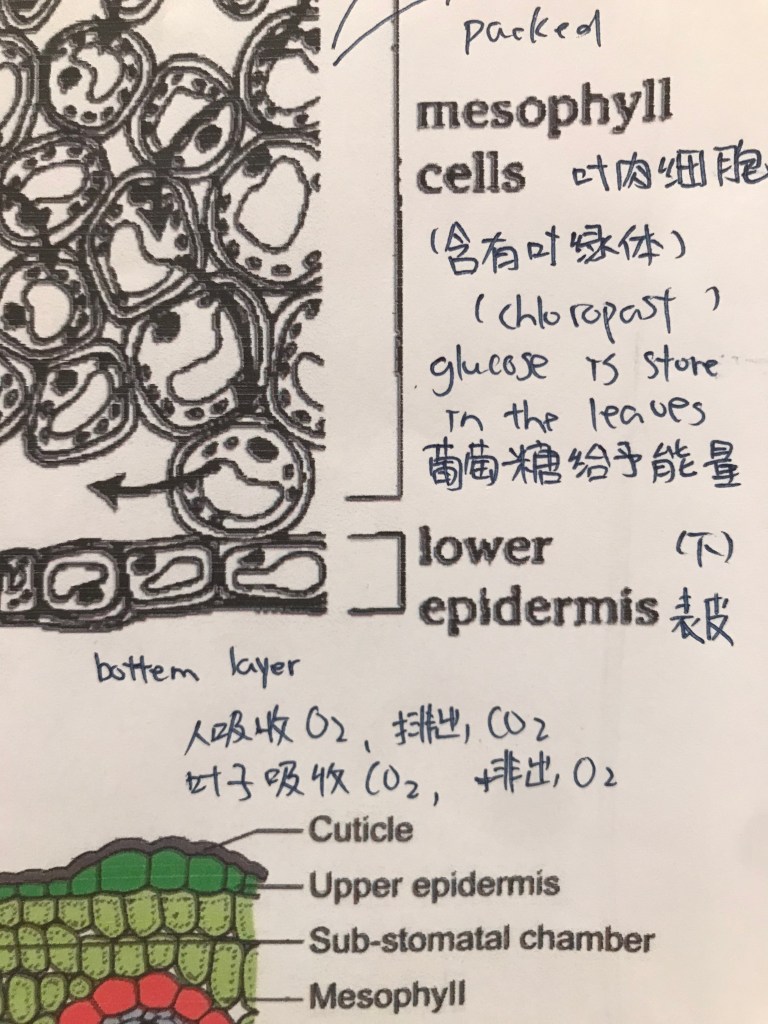
In this instance, students were given a blank diagram from their science class and instructed to discuss what they remembered from last week’s lesson and jot their thinking on the diagram and in the margins. As you can see, they used a combination of Mandarin and English to complete the task.
Students having an Annotation ConversationNotes demonstrating what students know in English and Mandarin
Benefits
Lightens the language load
Keeps the focus on thinking and analyzing, rather than on correct use of English
Activates prior knowledge
Check Your Answer
Next time you want students to self-correct an assignment, try grouping students who share the same L1 together. Partners or groups of 3 are ideal. Ask them to check their answers for accuracy against a teacher-prepared answer key. Then, and this is the vital translanguaging component, admonish them to use their L1 as needed to clarify why they missed certain items and how to arrive at the correct answer. They can then go back later and add any notes they wish in English with the help of a dictionary or translation app. By using L1 when clarifying understanding, MLLs can use the full range of their vocabulary and knowledge to solidify new learning in L2.
Students clarifying answers using multiple languages
Benefits
Activates prior knowledge in L1
Encourages analysis and metacognition
Provides multiple access points for clarifying information gaps
List-Group-Label
This is a vocabulary and comprehension strategy that I initially used in an elementary classroom. If you’re not familiar with the activity, you may wish to view this video by Reading Rockets. I love how the activity promotes interaction and critical thinking, so I adapted it for use in my high school English Language Development (ELD) classroom and turned it into a translanguaging activity. Rather than have the students brainstorm key words as in the video, I list the academic words I want them to use on the board or chart paper.
First, organize students into pairs or small groups who share the same L1 and provide them slips of paper or note cards. Students then work together to write key terms on slips of paper in L2. For virtual learning, it works well to prepare these digitally in advance so that students can move them around on a shared document. Then, direct students to use L1 and/or L2 to determine logical categories for the words and an appropriate label for each category. Students then share their reasoning and justification aloud in L2. Emergent bilinguals may benefit from sentence frames like this one:
We put these words into a group labeled________because___________.
Students working together to List, Group, and label academic vocabulary
Benefits
Facilitates communication of higher order thinking
Promotes grade-level maintenance of L1
Develops analysis and metacognition
Contextualizes academic vocabulary
To extend this activity even further, take a photo of each group’s completed task so that the key words and labels are visible. Print one copy of each to use for the next class period. When the class meets again, give each group a photo of another group’s work from the previous day and encourage them to identify similarities and differences in how they would have organized and labeled the same words. Again, encourage use of L1 to facilitate deep thinking. This provides another opportunity for students to clarify ideas, to use academic vocabulary in context, and to hear how peers use these terms.
Students discussing another group’s List-Group-Label strategy
No matter which grade or subject you teach, there’s a place for translanguaging. When MLLs are invited to bring their full language repertoires to school and use them for learning, they’re making use of one of their greatest assets: the gift of being multilingual. The ideas outlined here are simple yet powerful and I hope you’ll give them a try. When you do, I’d love to hear how it goes.
Hammond, Zaretta. Culturally Responsive Teaching and The Brain: Promoting Authentic Engagement and Rigor Among Culturally and Linguistically Diverse Students. SAGE Publications, 2015.
Thank you for joining me here as I celebrate another trip around the sun with my newly acquired label: Retired Teacher. Creating this site is a gift-to-self that I had hoped to accomplish a couple of years ago, but, well, let’s just say the world got in the way of a few things.
For all of you out there teaching your hearts out during this pandemic, I see you and I recognize your challenges. No one can ever fill your shoes. I am here for you and—while I may not be in a classroom—I support you and want what’s best for you and your students. After all, that’s why we’re here. For you and them, I am ALL IN!
When I announced my retirement to colleagues at the American International School of Guangzhou in China, responses were mixed. While everyone was happy for me and I was surrounded by incredibly supportive people, many also expressed concern. The concerns raised and the thoughts in my head sounded something like this:
But you’re made for the classroom and you’re still young. Thanks! I love you for saying that!
What will you do with your time? Won’t you be bored? You’re kidding, right? I’m a teacher; I still have to-do lists from the 90s!
What will you do with all that passion for kids and learning? True passion can’t be erased. Period.
You LOVE what you do! I can’t imagine you quitting. Quitting? Did you say quitting? I’m not a quitter and I’ll never quit kids and teachers.
Your workshops have been so helpful! Why would you leave? I’m not looking for burnout, I want to stay fresh. Besides, leaving the classroom doesn’t mean I’m leaving education. As if!
I met their concerns emphatically but cordially by explaining that, in no way, would my passion for teaching and learning ever fade. I noted that I could still be found on Twitter, and I relish the opportunity to connect with other professionals. I reiterated my commitment to collaborate with teachers for the benefit of students, whether via workshops or on Twitter. My global professional learning network is near to my heart, and I learn so much from everyone involved. I proposed that being out of the classroom would allow me the time to develop my craft even further, and to do even more consulting and collaborating than was possible while teaching full-time.
Visiting Saguaro National Park, Arizona
Well, June 2021 came and went with an unceremonious entry into retirement. While festivities had been planned to close out the school year, celebrate graduation, and say farewell to teachers who were moving on, an outbreak of Covid threatened our community just days ahead of the end of term. Our beloved school was compelled to close its doors early to prevent the spread of the virus, resulting in many important events being canceled. There was also little time or opportunity for closure, whether one was simply closing out a school year or, in my case, a career. I have to say, thoughts of that “last day” are difficult. I was not only finishing a wonderful career that had afforded me and my husband the opportunity to work in both US public schools and in international schools abroad where our children were also educated. There are so many people I wanted to say goodbye to, so many families I would never have an opportunity to meet again, so many important tasks to do, and so many places in my neighborhood I’d never visit again. There were more memories to make in the classroom, too, during lessons that would never be taught.
My intention upon retiring was to refresh and renew my energies while clarifying my vision for my future self. I had no idea how long this might take or how it would unfold, but that’s exactly how it has played out. I’ve had a few months now to reflect. I’ve remained connected with the important work of schools, continue to learn from colleagues around the world, and to collaborate with teachers as they develop programs for students. I’ve had some days of sleeping in, and weeks of exploring our country. Along with my husband, we’ve been living in a converted camper van since September of 2021.
Though we had always dreamed of an extended road trip on the east coast to take in the vibrant fall foliage, the container ship carrying our belongings from China to the US became stranded as it awaited space and permission to dock. Our moving company advised us to be ready to receive the shipment at any time and, though it ended up taking 5 months to complete this process, being tethered to the American southwest at that time came with its own opportunities to explore.
We’ve spent the months after retirement traveling along the west coast and throughout the southwest of the country. We caught up with people that we hadn’t seen in years and took in the sights at many of our country’s beautiful National and State Parks. We’ve been hosted by friends & family, we’ve glamped & camped and, on occasion, grabbed some instant noodles and a night’s sleep in a travel center parking lot. I’m grateful for having had the opportunity to reconnect with loved ones and to make memories along the way.
The One-Room Schoolhouse
From the latter half of the 19th century through the first decades of the 20th, this was the preferred learning environment in the US and many other countries such as Norway, Ireland and Prussia. It was the gathering place where young minds were educated, characters were shaped, and where the broader community enjoyed dances, socials, meetings, and other special events.
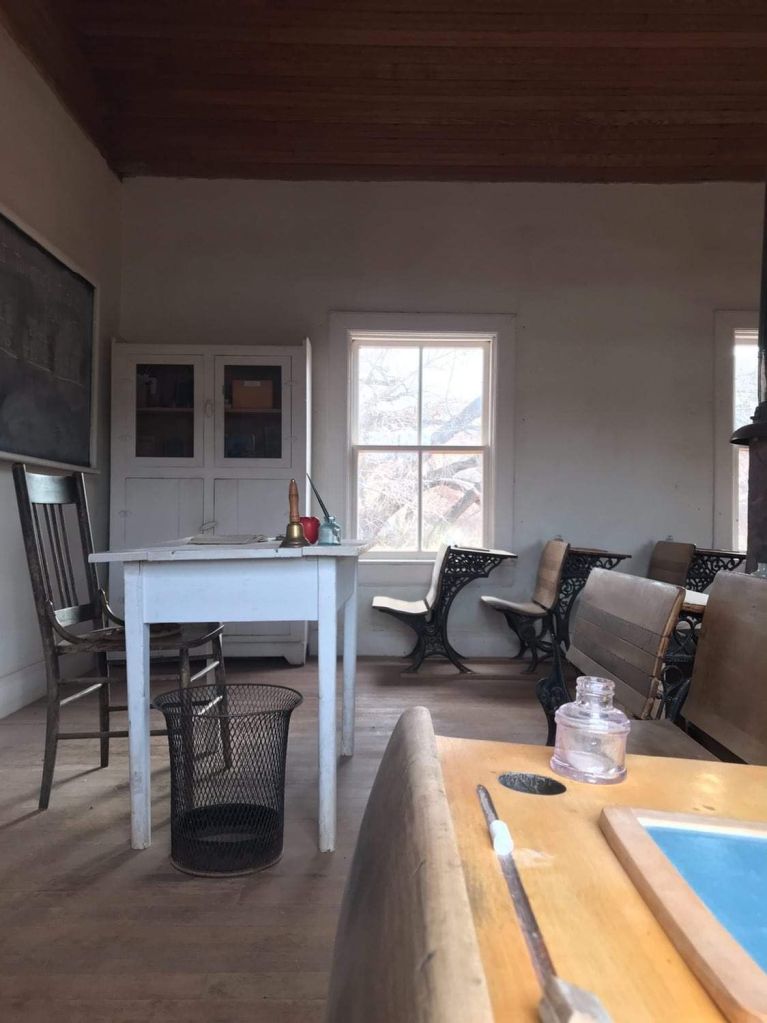
Fruita Schoolhouse, Capitol Reef National Park, Utah
On a recent road trip through Utah, we stayed at the Fruita Campground in Capitol Reef National Park. As two former classroom teachers, we were intrigued to learn about the Mormon pioneers whose history shapes the Park. Part of that history is witnessed in the form of a tiny, one-room schoolhouse preserved for visitors to see while visiting the Fruita region.
I’ve always had a fascination with the concept of the one-room schoolhouse and its place in our history, but I didn’t expect the wave of memories seeing one would trigger. As I stood at the National Park information plaque, which describes the community spirit represented by the building, I was instantly reminiscing about A Place Called School. Yes, the book by John Goodlad. Talk about a text-to-text connection!
The plaque implored us to ponder our own schooling, but my mind jumped to my undergrad days as a Human Development student at the University of California, Riverside, and to the post-grad credential program where I was shaped as an educator, where I really started to sink my teeth into the craft of teaching through collaboration with professors and classmates. For prospective educators of the 80s, Goodlad’s work was pivotal. He admonished us to make data-based changes that would, “improv(e) the schools we have” and to gear any changes toward the needs of specific school communities. He endorsed general education for all to include math, science, literature, language, society, social studies, the arts, and vocational training. He pushed our thinking with his own questions, some of which have stuck with me. “I wonder,” he reflects, “about failure that leads individuals to feel that they are not good at all.” Or this one (my favorite!) which follows his bold statement that boredom is rampant in our schools, “Why are our schools not places of joy?” Exactly.
These recollections became insights at this moment in my life that falls somewhere between my classroom teacher life and the next chapter of my career that centers upon supporting teachers. I, like Goodlad, prioritize reliance on data when making educational reforms. I want ALL students to explore a broad range of academic disciplines and creative pursuits. I believe students are served best when their teachers are supported through proper training for the incredibly complex and difficult work we do. I want students to feel like school is a good place and to experience the joy that comes from prevailing in the face of challenge and from the relationships they form with teachers and peers. These insights led to an epiphany. I need not wait to figure out where my post-classroom life is leading; I am living it! My passion for education is very much intact, and there’s no need to figure out my priorities for this phase of life. My priorities are clearer than ever.
In this new phase of my journey as an educator, my goal is to harness the assets of teachers to help all students thrive. I want to collaborate with you to build our capacity to meet the needs of all students, and create inclusive learning environments that support the whole child.













 ALL in Education